Pranidhaan Chincholikar’28
Staff Writer
On October 1st, 2025, the government shutdown commenced, and the effects were immediately noticeable. But why is this happening, and what will it mean in the long run? Government shutdowns are relatively rare, though they’ve become more frequent over the past fifty years. The last shutdown occurred six years ago, lasting from December 22nd, 2018 to January 25th, 2019—a total of 35 days, the longest in U.S. history.
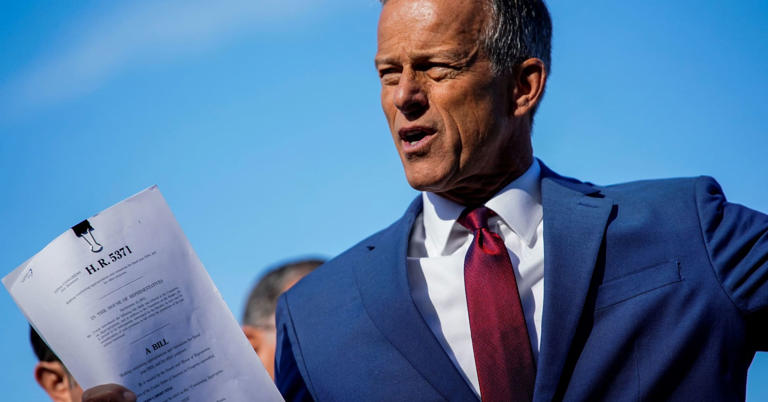
Similar to the last shutdown, this one began due to disagreements over funding. The threat of a government shutdown had been looming for several weeks before October 1st. Funding for Medicare benefits and healthcare subsidies have long been a point of contention between Democrats and Republicans. However, the trouble began when both sides failed to approve a budget plan for the 2026 fiscal year.
The problem is that the Senate must reach an agreement on a bill authorizing federal spending before October 1st. Without approval, the government cannot legally allocate funds. As a result, many public institutions have been forced to close their doors until Congress passes a funding bill.
Until this happens, several everyday government-provided services will
experience significant changes. While education and other essential services will continue, nonessential government positions and institutions will suspend operations and employees pay.
According to the Congressional Budget Office, up to 750,000 government employees are at risk of being furloughed, leaving many without financial security. Among the affected agencies are the National Parks Service—where all parks are now without rangers and staff—and several museums that are either fully or partially closed until the shutdown ends. One example is the Smithsonian Museum, which has managed to remain open by relying on last year’s funds. However, officials have publicly stated that if the shutdown continues beyond October 11, it will close to the public.
This shutdown has significantly impacted a range of nonessential institutions. The key question remains: when will it end? The Senate continues to meet over the funding dispute, but as CNN reports, there has been little movement or compromise from either side.
Until lawmakers in Washington reach an agreement, the shutdown is expected to persist—continuing to disrupt services and affect countless lives across the country.
 Great Oak Gazette
Leave a comment