Harrison Smith’29
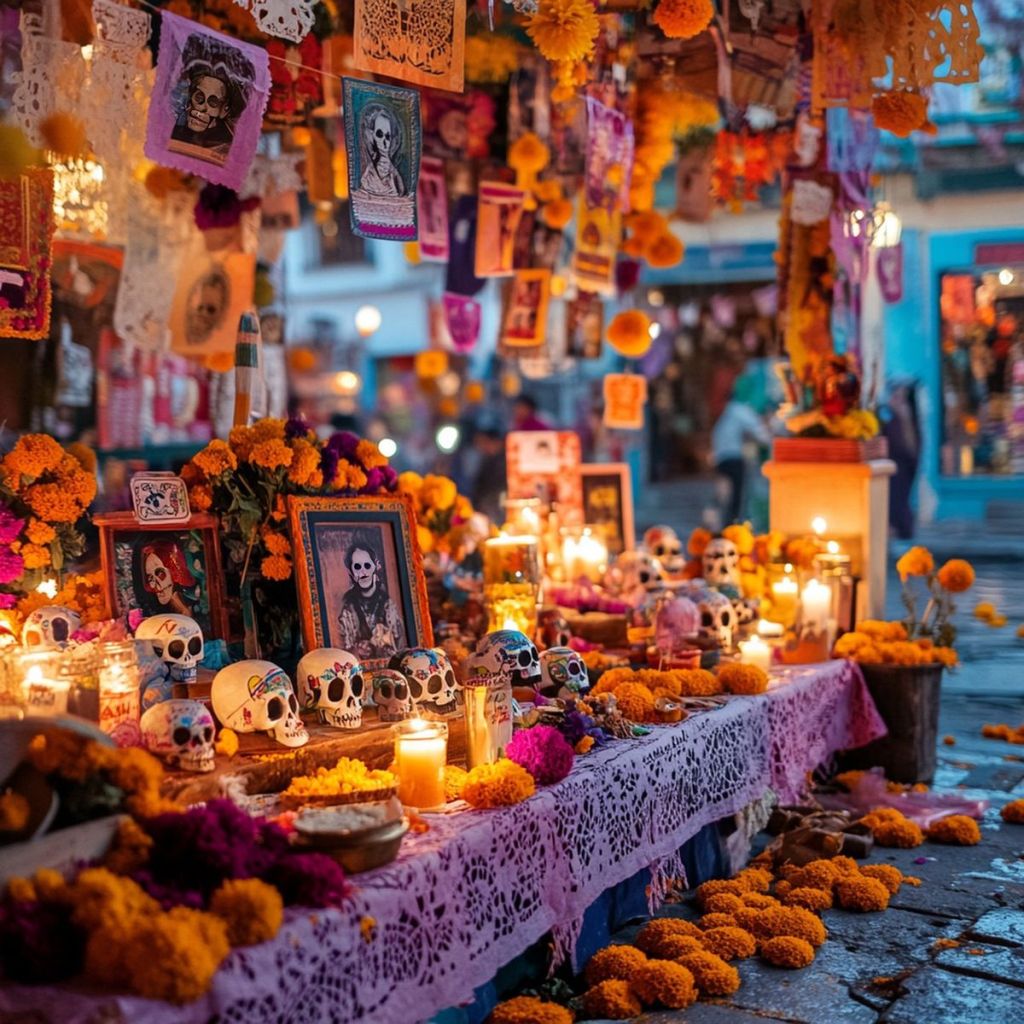
Imagine marigold petals glowing under candlelight, their bright orange hues lighting the night with warmth and memory. The air is soft with the scent of flowers, candles, and sweet bread as families gather in both reverence and celebration. It’s in these golden moments that the meaning of Día de los Muertos—the Day of the Dead—comes alive. Celebrated from October 31st to November 2nd, this Mexican holiday is about preserving traditions, honoring ancestors, and celebrating the love that keeps families connected across generations.
More than just a festival, Día de los Muertos carries a profound cultural message: Día de los Muertos allows individuals to reconnect with their departed loved ones, celebrating their lives and cherishing memories across time. It remains one of the most meaningful and symbolic holidays in Mexican folklore and culture. The tradition dates back to over 3,000 years, to the Aztec and Nahua Tribe civilizations, long before Spanish Conquistadors introduced Catholicism to the Americas .
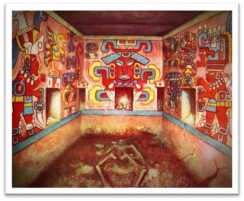
These ancient peoples viewed life and death as part of a continuous cycle and worshiped Mictecacihuatl, the Goddess of Death. They believed that when a person died, their soul journeyed through nine challenging stages of the afterlife before reaching Chicunamictlán, the Land of the Dead. This worldview inspired many of today’s Día de los Muertos customs, such as leaving offerings on graves and building altars, called ofrendas, to honor loved ones who have passed.
In recent years, Día de los Muertos has grown tremendously in popularity across Southern California. For example, the city of Santa Ana has hosted large Day of the Dead festivals for over a decade, beginning on November 1st each year. Since 2002, its Noche de Altares celebration has become one of the region’s largest community gatherings, bringing together families, artists, and visitors, to honor life, memory, and Mexican culture.
As a Mexican myself, it fills me with pride to write this article. Día de los Muertos is often overshadowed by celebrations such as Halloween or Thanksgiving, yet for many Mexican families, it holds even greater importance. To better understand its meaning, our Gazette team spoke with members of the Spanish community about what this holiday represents to them and how they celebrate it in today’s world.
We began by interviewing Mrs. Gomez, a Spanish teacher in the 300 building. Although she doesn’t personally celebrate Día de los Muertos, her knowledge of its origins and customs is extensive.
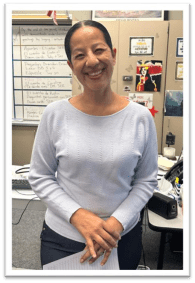
When asked about the traditions surrounding the holiday, she explained: “For the culture, it is a really important time—especially in smaller towns in Mexico. On the first day, people go to the market to buy everything they need, whether it’s flowers or candles. Then they clean the cemetery and prepare special food that their loved ones enjoyed. It’s believed that the spirits of their dearly departed come back to be with them, and that’s why it’s a celebration—because they are here for those two days.”
When asked if there was anyone she would choose to honor, Mrs. Gomez reflected: “I think for me, it would be my grandparents—especially my grandpa on my dad’s side. I got to spend a lot of time with him, and I loved all his advice. If I had the chance, I would honor him.”
To gain a younger perspective, I also spoke with Elias Delamarre, one of my closest friends and a freshman on campus. When I asked him how his Spanish heritage connects to Día de los Muertos and how his family celebrates, he explained their unique traditions:
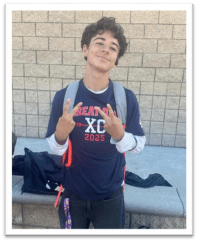
“We try to show our appreciation through special face paint,” Elias shared. “We get the whole family together, hang up skull decorations, and bake a cake that has a small Jesus figurine hidden inside one of the slices. Whoever gets the piece with the figure has to host the next party!
He also wanted to give a shoutout to someone very special in his life—his grandmother, who has always been a source of support and kindness:“I want to thank my abuelita. When I was younger, I had a slight speech impediment, and some of my family would make fun of me for it. But my grandma always told me it was okay—she never made me feel embarrassed.”
Thank you to Mrs. Gomez and Elias Delamarre for sharing their stories, photos, and insights for this article. Writing about Día de los Muertos has been a privilege, and as a proud Mexican, I can’t imagine a more meaningful topic for my first publication.
 Great Oak Gazette
Leave a comment