Genesis Abrams
Believing in luck wanes throughout the beginning of the year after the euphoric rush of the New Year. February’s onset drives America to search for another beacon of hope in mid-winter despair. The solution? Christening four-leaf clovers as a sign of prosperity and excitement during the new epoch of spring. Yet the luck that children and adults marvel at is merely scarcity falsely idolized. St. Patrick’s Day’s main lucky factor is a myth.
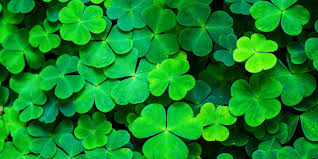
Advancements in science shatter childhood folktales and misconceptions daily, and research is moving along at making clovers common. Ingeniously practical, “ scientists from the University of Georgia found the area in the genome where the genetic trait for four leaflets is located” (Izlar 2024). This discovery, more than a decade ago, crushed the idea of Mother Nature having complete control over clovers, but the puzzle still exists. Even though clovers may be replicated soon, finding them naturally is still a struggle. Enthusiasts, however, evade this challenge; “Unlike true clover, Oxalis is native to South America and parts of North America and grows from small bulbs rather than spreading by runners” (Trott 2025). Imitation Oxalis’ abundance works as a perennial super-plant for fans of the holiday, spreading artificial fun throughout the year.
Discounting real shamrocks would be a discredit to their biological benefits. Their surprising relations transform environments; “Clovers are legumes and have the ability to form mutually beneficial relationships with soil microbes to fix atmospheric nitrogen into plant-available nitrogen” (Gelley 2025). Beans are often ignored by holiday enthusiasts as symbols of good fortune, yet their relatives are showered with praise. This hardy status does cause problems for clovers, considering, “weedy species has a bad rap among grass lawn purists-it’s incredibly beneficial to the soil and the ecosystem in general” (Izlar 2024). Some homeowners relent and plant complete clover lawns, while others still fight the free nitrogen on their land. Either way, without knowledge of clovers, novice gardeners miss a treasure trove without noticing.
One treasure trove worth missing this year is mindless consumerism. Costs associated with St. Patrick’s Day consistently trend upwards; “Sixty-one percent of consumers plan to celebrate and they expect to spend an average of $43.64” (NRF 2025). Following COVID, companies rebounded quickly with sales, as events like parades and parties returned post-pandemic. Nearly five years later, spending is bustling as if there was never a setback in the first place. Dangerous habits also exceed spending: “There were 290 people killed in alcohol-impaired-driving crashes during the St. Patrick’s Day holidays (6 p.m. March 16 – 5:59 a.m. March 18) between 2018-2022” (NHTSA 2026). Most deaths, like drunk driving incidents, took place among new drivers, mainly young men.
Some negative effects of St. Patrick’s Day are more benign, like the elusive Leprechaun. Leprechauns were crafty instead of charming, resorting to “…any means to distract his captor, but favourite techniques include playing on humanity’s greed and their gullibility” (Cartwright 2021). Idolizing a character that consistently tricked its audience into exposing their negative traits is an odd staple of St. Patrick’s Day. From Lucky Charms and golden chocolate coins, the chilling story was turned into another cash grab. These stories mainly reached America during times of desperation for the hopes of a better life for Irish immigrants.
The biggest surge of Irish culture took place during the mass migration of Irish people during the Great Potato Famine of the 19th century, caused by sickness, famine, and a desire for novelty. Celebrations imported into the US adopted their own style, “…more of a religious framing and solemnity in Ireland until well into the 20th century, in America it became the cultural and boisterous celebration it is today, marked by plenty of people without a trace of Irish heritage” (Hajela 2024). The US’s melting pot brews rambunctious spirit and pride into most holidays, making St. Patrick’s Day in America both a cultural landmark for Irish immigrants and an upheaval of the original concept. Straying so far from its religious roots is part of St. Patrick’s Day’s broad appeal, but the transplanted holiday can appear more like a cash grab without grounded traditions.
St. Patrick’s holiness is a focal point of Irish culture—he is the patron saint of Ireland after all. While he remains the main saint, others like St. Brigid and other less prominent saints were stricken from the record. Violence ensured a long legacy, “…[depicting] their saint in constant conflict with the “heathens” he tried to convert to Christianity” (Bitel 2022). Irish Catholicism favored men for their bold acts, while kindness and humility, common traits of female saints, were undermaintained in record-keeping systems. This disparity led to the disrepair of St. Brigid’s church in 1875, when St. Patrick was already famous as the prominent patron saint of Ireland. St. Brigid performed benevolent acts throughout her life, but a lack of record-keeping left her to the catacombs of history.
However, interest in St. Brigid is resurging, rivaling the effort taken to forget about her completely. Followers of her sect derive positive prayers in her name: “Brigid was venerated as ‘Mary of the Gael,’ a saint for women, shepherds, beggars, refugees and those in childbirth.” Brigid’s memory was restored for those she served throughout her life. Others still worship St. Patrick’s valor and conquering acts, but sensible, kind saints are also popular. Her holiday falling on the epoch of spring coincides with her idea of rebirth, proving her worth without violence.
St. Patrick’s Day is more than just a holiday, after all. Irish immigrants hold it as a cultural triumph, which later spread to America; companies revel in their profits, and accidents explode in frequency. The negatives are hardly worrying compared to the joy and pride shared across the world on March 17th, however. It’s a marginalized historical group sharing the traditions they collected over history. St. Patrick may not be the only patron saint of Ireland, but his holiday is cause to celebrate the luck and wonder Ireland has graced on the world.
 Great Oak Gazette
Leave a comment