Alex Coppock’26
“Reach For My Hand”
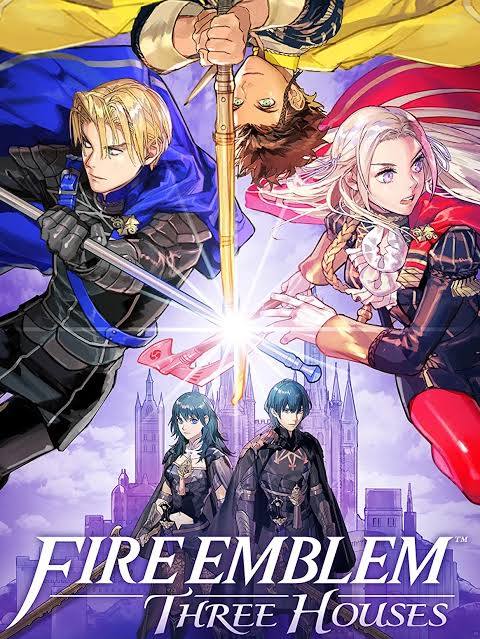
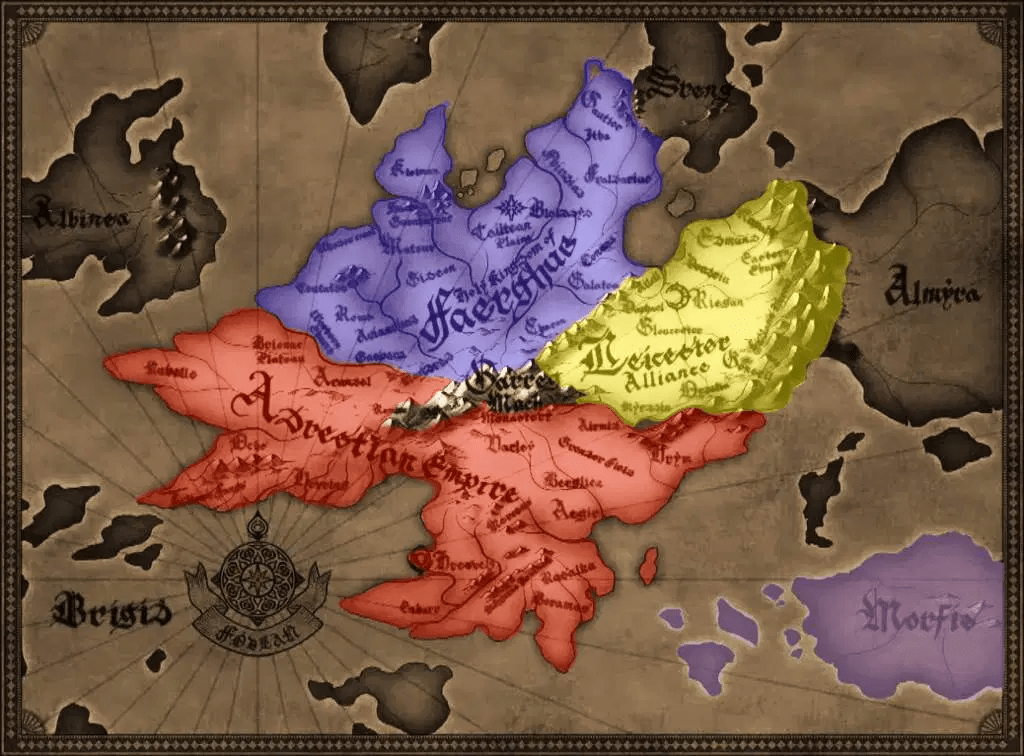
In the land of Fódlan, the setting of the 2019 tactical role-playing game Fire Emblem: Three Houses, power is divided between three nations: the Adrestian Empire, the Holy Kingdom of Faerghus, and the Leicester Alliance. Overseeing all three is the Church of Seiros, headquartered at Garreg Mach Monastery, home of the Central Church and the Officers Academy. However, all four of these powers and those who lead them have competing ideologies, and when war breaks out across Fódlan, it is the choices of Byleth—the player—that shape the future of the world. Byleth can side with one of these powers, depending on the choices they make on their journey. But how do the varying ideologies of these powers’ leaders shape the future of Fódlan?
The Edge of Dawn
Part I – Azure Moon – Dimitri
Dimitri Alexandre Blaiddyd is the Crown Prince—later King, depending on the route chosen—of the Holy Kingdom of Faerghus, and the leader of the Blue Lion House. He serves as the central protagonist of the Azure Moon route, the secondary antagonist of the Crimson Flower route, and as a major antagonist in the Verdant Wind route. On the surface, Dimitri’s ideals and personality seem to be that of a paragon of chivalry. However, his beliefs run much deeper—and darker—than they do at first glance. As the sole survivor of an event known as the Tragedy of Duscur, which took place four years before the start of the game, Dimitri suffers from crippling survivor’s guilt that has radically altered his beliefs and parts of his personality. He does not believe in simple chivalry; he despises the notion of killing for one’s ideals, rather than duty, which serves as a stark contrast to Edelgard’s worldview and beliefs (detailed in Part II). While he shares Edelgard’s disdain for Fódlan’s system based on Crests, nobility, and status, he believes that overthrowing the social order, as Edelgard plans to do, would only be detrimental to Fódlan because of the sacrifices that would be made and the blood that would be spilled, instead preferring to reform the system from within and purge corruption. He despises Edelgard’s method of killing in, as he views it, a senseless war, even for the goal of achieving peace free from the shackles of the standing order.
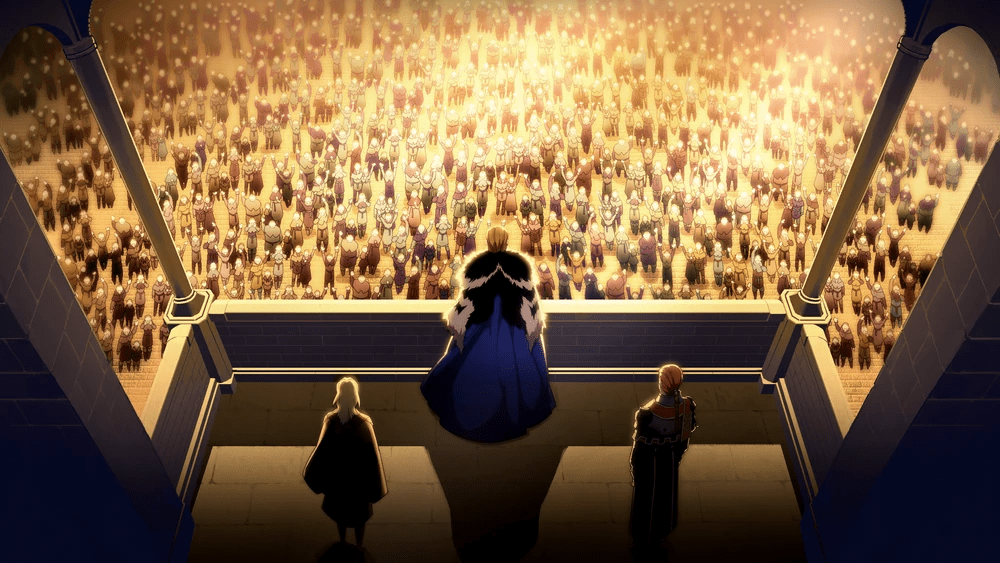
Dimitri (center) as the King of Faerghus as Byleth (left) and Gilbert watch.
Herein lies Dimitri’s hypocrisy, however; in the second half of the game, Dimitri himself becomes a remorseless killer. Driven by a blind and obsessive hatred of Edelgard, whom he (incorrectly) believes to be responsible for the Tragedy of Duscur, Dimitri descends into a guilt-driven, delusional madness. His psyche damaged, he loses any sense of his former self and becomes a cynical and ruthless killer. With any semblance of his happiness or composure seemingly gone, he becomes brooding, and he often converses with hallucinations of his deceased loved ones that he believes he failed, using them to justify his murders under the belief that “The dead must have their tribute.” He becomes almost entirely unsympathetic to the plight of the living, choosing instead to focus on his need to appease the dead. However, he still believes that one should not kill for their ideals, using this to dehumanize other killers as mere beasts for him to torture and kill. In three of the four routes of Three Houses, Dimitri will die in battle, consumed by his thirst for vengeance. However, in the Azure Moon route, following the death of Rodrigue, a close friend and second father figure to him, with Byleth’s guidance, he regains his sanity and his resolve, not to kill Edelgard out of revenge, but to defeat her and put an end to the war. Following Edelgard’s defeat, in which he attempts to spare her, Dimitri becomes the benevolent King of Fódlan, renowned for bringing about societal reform and creating a participatory government.
Part II – Crimson Flower – Edelgard
Edelgard von Hresvelg is the Imperial Princess of the Adrestian Empire, who later becomes its Emperor, and the leader of the Black Eagle House. She serves as the overall secondary antagonist of the game, being the central antagonist in the first half of the game as the elusive Flame Emperor (White Clouds), the secondary antagonist of both the Silver Snow and Verdant Wind routes and the main antagonist of the Azure Moon route. However, should the player choose to side with Edelgard, she will instead serve as the central protagonist of her own route, Crimson Flower. Ideologically, Edelgard serves as a foil to Dimitri in many aspects. At her core, Edelgard is an idealist like Dimitri, but she is much more stubborn and cynical in her worldview and her beliefs about the power structure, supported by Crests and the Church (explained in more detail in Part III), in comparison to Dimitri, who is much more open-minded to the point of almost being naïve. Edelgard firmly believes that the Crest system, propagated by Rhea and the Church, is to blame for the irrationality and cruelty of Fódlan’s massive societal divide. She believes that society should be based on merit, not on status as a commoner or noble, and wishes to put a stop to the cycle of the strong trampling over the weak. However, where she contends with Dimitri most is her methodology. Edelgard believes in the world she’s trying to create—so much so that in order to create her world, she’s willing to start a war. Edelgard believes that in order to truly have peace, free from the Church of Seiros’s regime, sacrifices must be made. She does not kill without remorse; Edelgard is aware of the blood she spills, but she does not kill unless it is deemed to be absolutely necessary, often contemplating the enemy’s surrender. Only if it is demanded will she kill an enemy. No matter how many lives are lost and how much blood is shed, she believes that her path is a righteous one so long as it eventually leads to peace and the toppling of the Church.
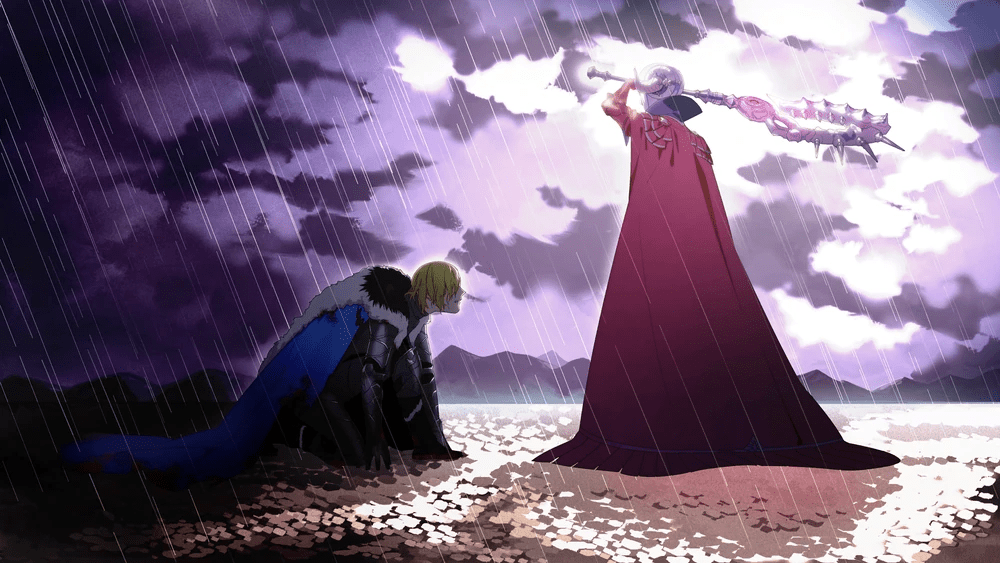
Edelgard (right) as she prepares to slay Dimitri.
However, Edelgard is also privy to the flaws within her ideology. She’s well aware that there will be many who shun her for the blood she has spilled. She knows that some people, after all is said and done, will call her a tyrant who brought about a senseless war. Despite that, Edelgard chooses to continue down her path. The result of this varies depending on the story route chosen by the player. In both Verdant Wind and Silver Snow, Edelgard will meet her end at Byleth’s hands with both remorse and understanding, realizing that the only remaining path to peace lies across her own grave, and that Byleth must find the courage to walk it. In Azure Moon, however, Edelgard is much less remorseful of her actions. In her desire to create peace, she becomes so morally corrupt in her violent actions that she truly borders on evil, even transforming herself into a Demonic Beast during her final confrontation with Dimitri and Byleth. Even after her defeat, when Dimitri reaches out his hand to her in an attempt to spare her, she makes a final bid to attack Dimitri by throwing a dagger at him, ultimately leading to her death. However, if the player sides with Edelgard on the Crimson Flower route, Byleth will act as Edelgard’s moral compass, preventing her descent into true tyranny as she fights for freedom against an increasingly corrupt Church of Seiros. The route ends with Edelgard finally killing Rhea and dismantling the Church and the Crest system it created, telling Rhea that “When humanity stands strong and people reach out for each other… there’s no need for gods.” This quote defines the truth of her ideology. Edelgard is an idealistic believer. She doesn’t believe in the strength of the Goddess or the “divine blessings” of Crests that the Church preaches. She simply believes in the strength of humanity, and she fights for a world where humans can forge their own paths separate from social status.
Part III – Silver Snow – Rhea
Rhea is the Archbishop of the Church of Seiros, effectively serving as the central leading figure of Fódlan. In reality, she is secretly Saint Seiros herself, the founder of the Church of Seiros and the Seiros faith almost one thousand years before the start of Three Houses and the last surviving daughter of the Goddess, Sothis. Unlike the three House leaders, Rhea is not a playable character who serves as the central protagonist of any given route. However, she remains central to the game’s story, being the one who created Fódlan’s system of Crests and nobility and teaches Byleth about the history of the Goddess and the Church in the first half of the game. The history of Fódlan, the Crests, the Goddess, and the Heroes’ Relics, as told by the Church, explains that the Goddess blessed the King of Liberation, Nemesis, and his followers, the Ten Elites, with the Sword of the Creator, the other Heroes’ Relics, and Crests, which were divine blessings from the Goddess, for the purpose of defeating wicked gods and liberating humanity. However, Nemesis went mad with power, and was forced to be put down by Saint Seiros and her Four Saints during the War of Heroes, which led to the creation of the Adrestian Empire when Seiros and the Four Saints shared their blood with the humans who went on to found the Empire, giving them Crests as well.
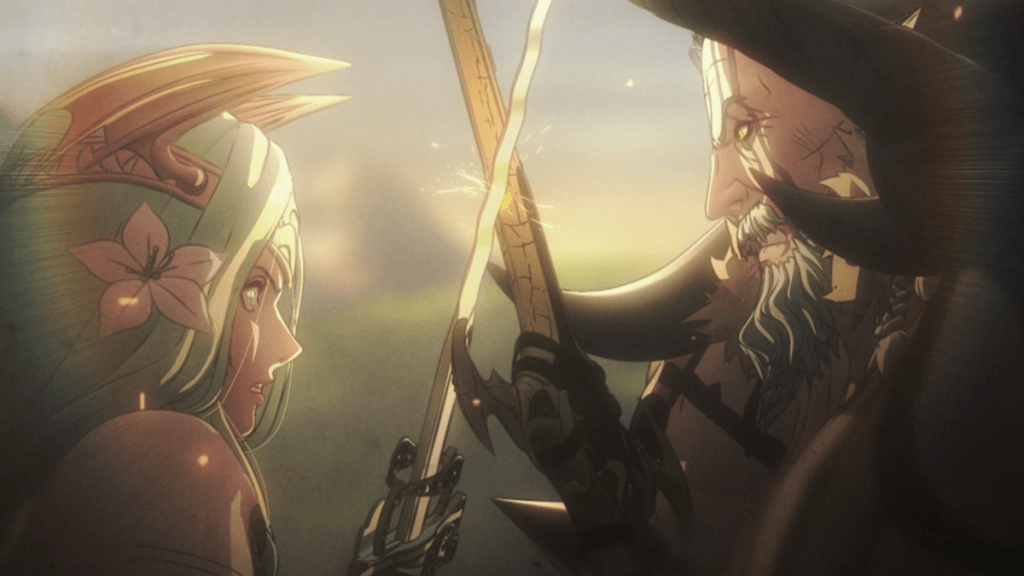
Rhea (left) as Saint Seiros, dueling Nemesis during the War of Heroes.
However, this history of Fódlan is a lie, fabricated by Rhea when she founded the Church. In reality, Nemesis and his Elites were bandits who, sponsored by Those Who Slither in the Dark (a secret society dedicated to the destruction of the Goddess and her followers), desecrated the Holy Tomb and murdered Sothis, using her bones and heart to create the Sword of the Creator, which was used to massacre the Children of the Goddess, whose bones were used to create the other Heroes’ relics. Sothis’s blood, as well as the other Childrens’, was used to give them Crests. As the sole survivors, Seiros and the Four Saints waged war against Nemesis. Seiros, following the end of the war and the establishing of the Church of Seiros, rewrote history and created the Crest system and the nobility in order to ensure peace and stability in Fódlan. However, the Crest system also created a major societal divide and became frequently abused by the nobility, who viewed Crests as status symbols due to believing them to be blessings from the Goddess. Rhea is also responsible for unethical human experimentation in her attempts to resurrect Sothis, which eventually led to the creation of Byleth, who serves as a vessel for Sothis’s power. In her rewriting of history, Rhea acts selflessly; she glorifies those who murdered her brethren and the Crests for the sake of maintaining peace and stability. However, her trauma makes her resistant to change even in the face of an openly broken system that she created, and her refusal to move on and constant covering up of incidents for the sake of maintaining a fragile peace ultimately leads to her ideological clash with Edelgard and Claude.
Part IV – Verdant Wind – Claude
Claude von Riegan is the heir to the title of Duke Riegan, the leading house in the Leicester Alliance, and the leader of the Golden Deer House. In the second half of Three Houses, he inherits the title of Duke from his grandfather. In secret, he is also a prince in Almyra, a neighboring nation to Fódlan, with whom they have tense relations. He serves as the central protagonist of the Verdant Wind route, a major antagonist in the Crimson Flower route, and as a major character in the Azure Moon route. Claude is charming and easygoing on the surface, but is known by everyone at the Officers Academy to be much more intelligent, calculating, and devious than he appears. He is known to his allies and enemies alike as the Master Tactician. Claude has grand ambitions, not just for Fódlan, but for the world as a whole. Due to being seen as an outsider his whole life, as a result of his mixed Almyran-Fódlan heritage, he dreams of breaking the cultural barrier and having each nation be more accepting of each other as equals. His goal is to make Fódlan, which, under the influence of Rhea and the Church, is notoriously isolationist with a negative view towards anyone who might be considered an outsider, open to the outside world. To that end, he also agrees with Edelgard’s mission of dismantling the Church and the Crest system. However, despite this, he realizes that his dream and Edelgard’s cannot coexist with one another, and he opposes her during the war.
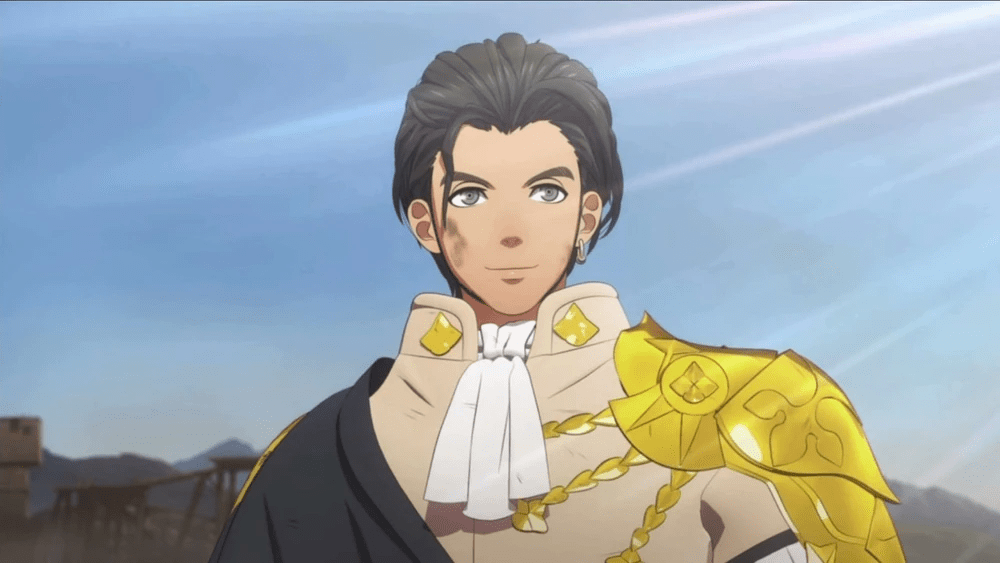
Claude following the final defeat of Nemesis, having achieved Fódlan’s New Dawn.
In the Verdant Wind Route, Claude becomes interested in uncovering Rhea’s secrets and the true history of Fódlan, including the truth of Byleth’s identity. When she goes missing during the war, Claude forms an alliance with the Church in order to find her. However, he has no intention of returning Rhea to power, nor does he intend to rule over Fódlan himself. As he opens himself up more to Byleth, he begins to share his dream with them, and entrusts the future of Fódlan to them. To a lesser extent than with Edelgard, Byleth serves as a moral compass to Claude, guiding him to make the right choices for the sake of ending the war so that they may work towards his dream and make it come into fruition. This becomes more apparent in Fire Emblem Warriors: Three Hopes, a spinoff of Three Houses, as the lack of Byleth’s moral presence in all story routes leads to Claude becoming much more cutthroat and ruthless in his tactics, even becoming willing to betray his allies in order to achieve his goals. Like Edelgard, he dislikes blind faith in gods, and prefers to rely on the strength of humanity. When challenged by a resurrected Nemesis for not facing him in single combat (instead battling alongside Byleth), he tells him that “we have the strength to scale the walls between us, to reach out our hands in friendship so we can open our true hearts to one another. That’s how we win!” His declaration is a summary of his beliefs; if humanity can look past their differences and realize their similarities and work together to fix the world that they share, then they can create a better world. Claude is a dreamer; he believes in equality and despises prejudice, not just in Fódlan’s social system, but in the world as a whole, dreaming of unifying the world as one people. After defeating Nemesis for the final time, Claude departs Fódlan (only returning if the player pursues a romantic relationship between Byleth and Claude) for Almyra, working to improve relations between the two nations and dismantling the prejudices of old, becoming known as the King of Unification.
 Great Oak Gazette
Leave a comment